Prove It Again: The Uncomfortable Truth Behind Continuous Employee Authentication
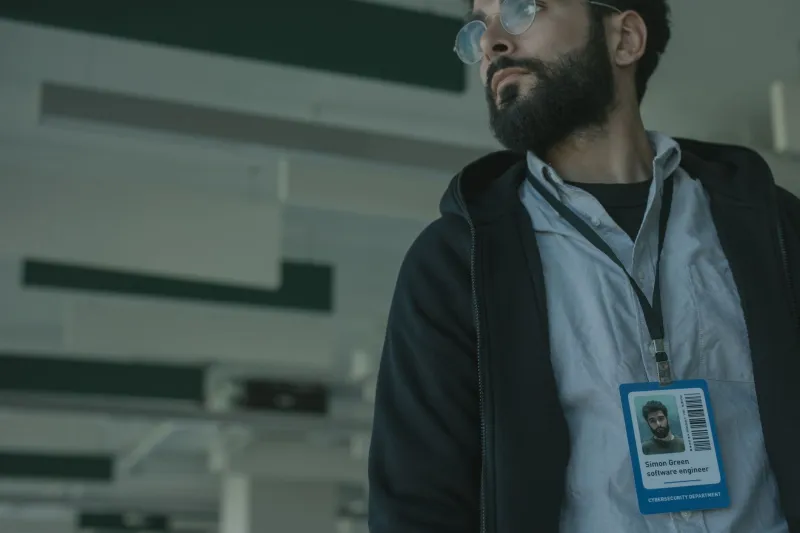
For decades, the dominant model of enterprise identity verification operated on a single, largely unchallenged assumption: authenticate once at the door, and trust follows the employee everywhere they go. That assumption is now under sustained assault.
Across industries ranging from financial services to healthcare to federal contracting, organizations are deploying continuous authentication frameworks that demand employees periodically—sometimes constantly—re-establish who they are throughout the workday. The rationale is compelling on its surface. Insider threats account for a significant and growing proportion of enterprise data breaches. Credentials get stolen, sessions get hijacked, and a single successful login can provide an attacker with hours of uninterrupted access. If authentication only happens once, the entire defensive architecture rests on a single point of failure.
Yet the organizations implementing these systems are discovering something their architects did not fully anticipate: employees push back, productivity suffers, and in some cases, the friction created by persistent re-verification generates entirely new categories of risk.
The Insider Threat Calculus
The data driving the push toward continuous verification is difficult to dismiss. According to the Ponemon Institute, insider-related incidents—whether malicious, negligent, or credential-based—cost U.S. organizations an average of $16.2 million annually. More troubling, the average time to contain an insider incident stretches beyond 85 days. During that window, a compromised or malicious actor operating under a legitimately authenticated session can cause damage that no perimeter defense will detect.
"The problem with point-in-time authentication is that it creates a verified snapshot of a moment that has already passed," said one chief information security officer at a mid-sized financial services firm in the Northeast, who requested anonymity to speak candidly about internal security architecture. "By the time an attacker inherits a session, we've already handed them the keys."
Continuous verification attempts to close that gap by treating identity not as a binary gate but as an ongoing, dynamic assertion. Rather than asking "Who are you?" once at login, these systems ask the question repeatedly—through behavioral biometrics, device posture checks, cryptographic session tokens, and increasingly, blockchain-anchored identity assertions that create tamper-evident records of each re-verification event.
Where Friction Becomes the Enemy of Security
The theoretical elegance of continuous authentication tends to collide with operational reality in ways that security architects underestimate. When employees are interrupted multiple times per hour to confirm their identity—whether through a biometric prompt, a push notification, or a hardware token interaction—the experience degrades rapidly.
Research consistently demonstrates that when security measures become sufficiently inconvenient, employees find ways around them. They share sessions, leave systems unlocked to avoid re-authentication delays, or route work through less-monitored channels. In this respect, overly aggressive continuous verification can inadvertently manufacture the very vulnerabilities it was designed to eliminate.
"There's a threshold where friction stops being a deterrent and starts being an invitation for workarounds," said a senior identity architect at a large healthcare network operating across multiple U.S. states. "We've seen employees share credentials not because they're malicious but because the re-verification cadence made it impossible to do their jobs otherwise."
This phenomenon—security theater producing shadow behavior—represents one of the most underappreciated risks in the continuous authentication debate. When verification becomes performative rather than purposeful, organizations gain the administrative appearance of rigor while the actual security posture quietly deteriorates.
The Blockchain Anchor and What It Changes
One development reshaping the continuous verification conversation is the emergence of blockchain-based identity platforms that can record, timestamp, and cryptographically secure each re-verification event without requiring manual employee interaction. Rather than demanding that a human repeatedly prove their identity, these systems maintain a persistent, cryptographically verifiable chain of identity assertions anchored to an immutable ledger.
The practical implication is significant. An employee does not need to respond to a prompt every thirty minutes if their device posture, behavioral patterns, and cryptographic credentials are continuously and passively validated against a blockchain-anchored identity record. The verification happens in the background. The employee's experience remains uninterrupted. And the audit trail—should an incident investigation require it—is complete, tamper-evident, and legally defensible.
"When verification is woven into the infrastructure rather than imposed on top of the user experience, the friction argument largely disappears," the Northeast CISO observed. "The employee isn't being asked to prove anything. The system is doing it for them, continuously, without interruption."
This architectural shift reframes the continuous verification debate in an important way. The friction associated with persistent re-verification is not an inherent feature of continuous authentication—it is a consequence of poorly designed implementation. Systems that rely on active, interruption-based re-verification generate friction by design. Systems that rely on passive, cryptographically verifiable, blockchain-anchored identity assertions generate security without the corresponding cost to employee experience.
The Question of Proportionality
Not all enterprise environments require the same verification intensity, and one of the more nuanced conversations happening inside U.S. security teams involves calibrating re-verification frequency to actual risk exposure. A marketing analyst accessing creative assets does not present the same risk profile as a privileged administrator with access to production databases or financial reporting systems.
Risk-adaptive authentication models—sometimes called step-up authentication—apply heightened verification requirements only when behavioral signals or access patterns suggest elevated risk. Accessing a routine document might require no additional verification. Attempting to export a large dataset, access a privileged system, or perform a high-value transaction might trigger a more rigorous identity challenge.
The advantage of this approach is proportionality: employees performing routine work experience minimal interruption, while the verification burden scales with the sensitivity of what is being accessed. The challenge is that the risk signals driving step-up authentication must themselves be reliable, continuously monitored, and resistant to manipulation by a sophisticated insider who understands how to operate below the detection threshold.
Security Theater or Essential Defense?
The framing of continuous verification as either essential security or performative theater is, in many respects, a false dichotomy. The answer depends almost entirely on how the verification is implemented, what it is anchored to, and whether the underlying identity infrastructure can support the claims being made.
Point-in-time authentication tied to a username and password is almost certainly insufficient in 2025. But continuous re-verification that relies on active user interruption without a cryptographically sound identity foundation may generate compliance metrics without meaningfully reducing risk.
The most defensible position—and the one that an increasing number of enterprise security leaders appear to be converging on—is continuous, passive, cryptographically verifiable identity assurance that operates beneath the surface of the employee experience while producing an auditable, immutable record of every identity assertion made throughout the workday.
That model does not ask employees to prove who they are every single day. It maintains that proof continuously, automatically, and without asking for permission each time. The distinction may seem technical. In practice, it is the difference between security that works and security that merely appears to.